PCOS, PMDD, and Perimenopause Share One Hidden Pattern
PCOS, PMDD, and Perimenopause Share One Hidden Pattern
If you have been diagnosed with PCOS, PMDD, or perimenopause, you probably have a different specialist for each one. A gynecologist for the PCOS. A psychiatrist or therapist for the mood disruption of PMDD. A primary care physician telling you perimenopause is just part of aging. Three appointments, three conversations, three treatment plans that never speak to one another.
After two decades in women's medicine, here is what I have come to believe: these are often not three separate problems. They are the same biology showing up in different decades.
The pattern almost no one connects
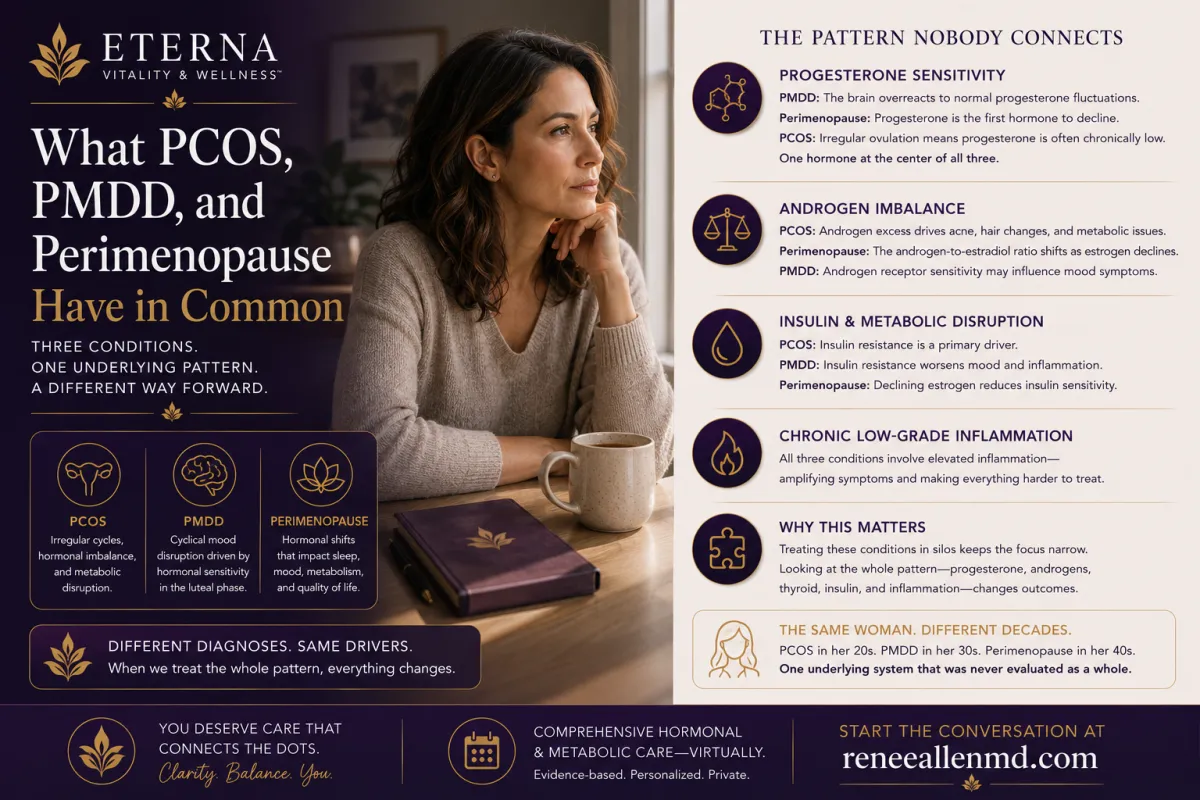
On the surface, these conditions look different. Different symptoms, different ages of onset, different specialists. Underneath, they share a remarkably similar set of drivers.
Progesterone sensitivity. In PMDD, the brain reacts abnormally to normal progesterone fluctuations, creating anxiety and cognitive shutdown in the luteal phase. In perimenopause, progesterone is the first hormone to fall, driving cycle irregularity and sleep disruption long before estradiol visibly drops. In PCOS, progesterone is often chronically low because irregular ovulation means the signal to produce it never fires consistently.
Androgen imbalance. PCOS is defined in part by androgen excess that drives acne, hair changes, and metabolic disruption. Those same shifts appear in perimenopause as estradiol declines, producing new acne, thinning hair, and changes in body composition women rarely connect to the transition.
Insulin and metabolic disruption. Insulin resistance is the engine behind most PCOS. It also worsens PMDD by amplifying inflammation, and in perimenopause, falling estradiol reduces insulin sensitivity, so women who never had blood sugar issues suddenly gain weight and crash mid-afternoon.
Chronic low-grade inflammation. All three involve elevated inflammatory markers that make every other symptom louder.
Why this matters for treatment
When these conditions are treated in silos, the interventions stay narrow. PCOS gets birth control and metformin. PMDD gets an antidepressant. Perimenopause gets a suggestion to wait it out. Each may help one layer of one condition. None address the shared pattern running underneath all three.
When you zoom out, the approach changes. Progesterone becomes a neurological stabilizer and metabolic player, not just a reproductive hormone. Insulin management stops being a PCOS-only tool. Androgen balance is evaluated against the full hormonal picture instead of in isolation. And inflammation is treated as the amplifier it is.
The same woman, different decades
In her 20s, she was diagnosed with PCOS — irregular cycles, jawline acne, weight that resisted everything. In her 30s, the mood crashes before her period became impossible to ignore. In her 40s, the sleep, the brain fog, the changing body. Three diagnoses. One pattern, evolving.
This is exactly the kind of full-picture evaluation we do at Eterna Vitality & Wellness — looking at hormones, metabolism, and inflammation together, not one complaint at a time. If your story spans more than one of these chapters, the answer that has been missing for years often becomes clear in a single conversation.
Ready to see the whole picture? Book your virtual consultation at www.reneeallenmd.com.


