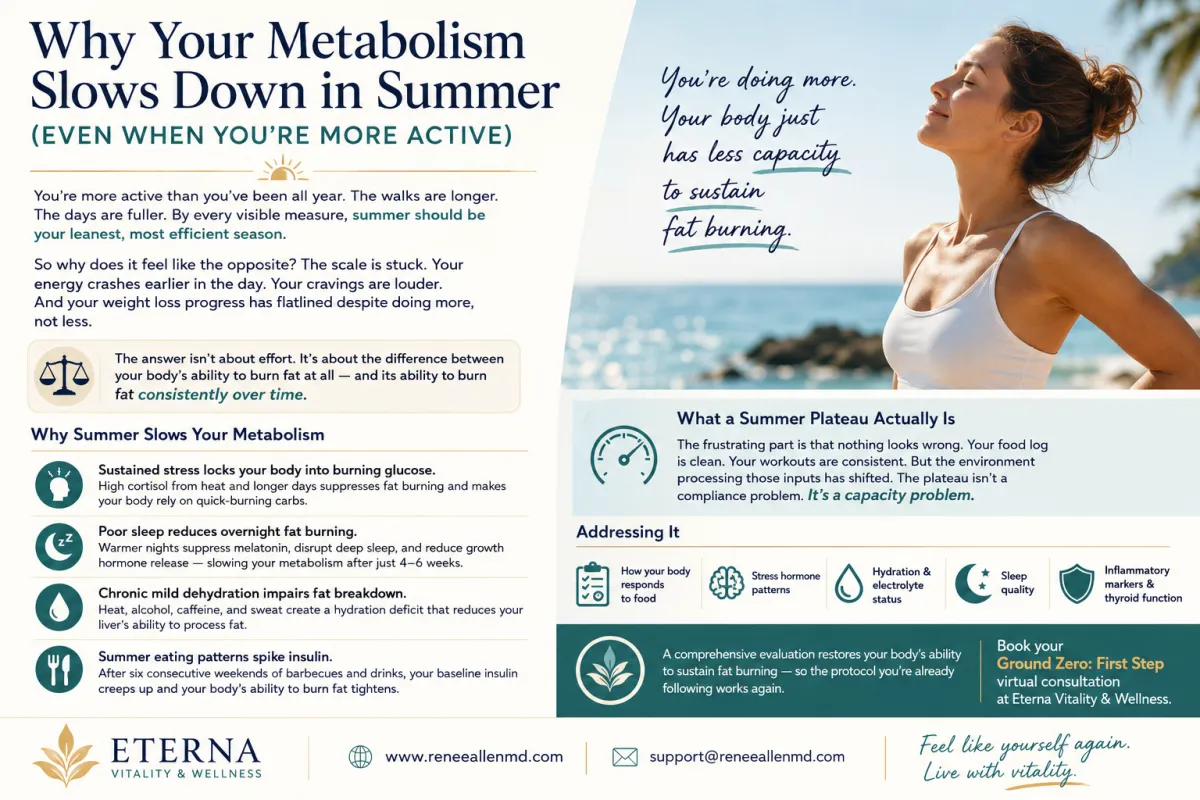
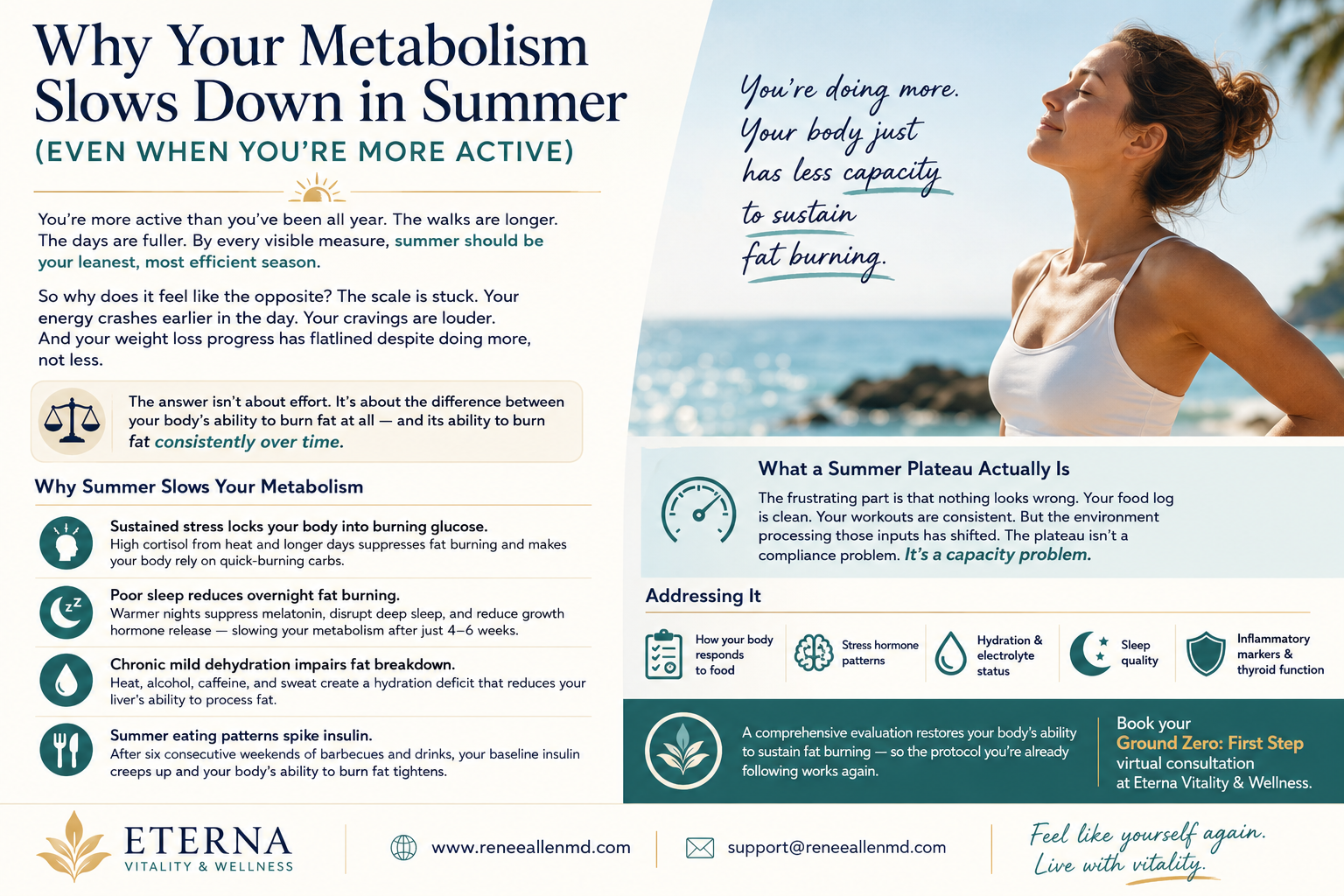
Why Your Metabolism Slows Down in Summer (Even When You're More Active)
Why Your Metabolism Slows Down in Summer (Even When You're More Active)
You're more active than you've been all year. The walks are longer. The days are fuller. By every visible measure, summer should be your leanest, most efficient season.
So why does it feel like the opposite? The scale is stuck. Your energy crashes earlier in the day. Your cravings are louder. And your weight loss progress has flatlined despite doing more, not less.
The answer isn't about effort. It's about the difference between your body's ability to burn fat at all — and its ability to burn fat consistently over time.
Metabolic Flexibility vs. Metabolic Endurance
A healthy metabolism can switch between stored fat and glucose as fuel sources. The question summer raises is: for how long? Your body's ability to sustain fat burning hour after hour is what gets eroded in summer. And it happens systematically.
Sustained stress locks your body into burning glucose instead of fat. When cortisol stays elevated for weeks from heat and longer days, it suppresses fat burning. Your body becomes increasingly dependent on quick-burning carbs because cortisol signals that stored fat is too slow.
Poor sleep reduces overnight fat burning. Warmer nights suppress melatonin, disrupt deep sleep, and reduce growth hormone release — which drives overnight fat burning and muscle repair. After four to six weeks of poor summer sleep, your resting metabolism slows.
Chronic mild dehydration impairs fat breakdown. Summer heat, alcohol, caffeine, and increased sweat create a hydration deficit most people don't recognize. When cellular hydration drops, your liver's ability to process fat decreases.
Summer eating patterns spike insulin without enough recovery time. After six consecutive weekends of barbecues and drinks, your baseline insulin has crept up and your body's ability to burn fat has tightened.
What a Summer Plateau Actually Is
The frustrating part is that nothing looks wrong. Your food log is clean. Your workouts are consistent. But the environment processing those inputs has shifted. The plateau isn't a compliance problem. It's a capacity problem.
Addressing It
A comprehensive evaluation looks at how your body responds to food, your stress hormone patterns, hydration and electrolyte status, sleep quality, inflammatory markers, and thyroid function. The goal is to restore your body's ability to sustain fat burning — so the protocol you're already following works again.
Book your Ground Zero: First Step virtual consultation at Eterna Vitality & Wellness.


